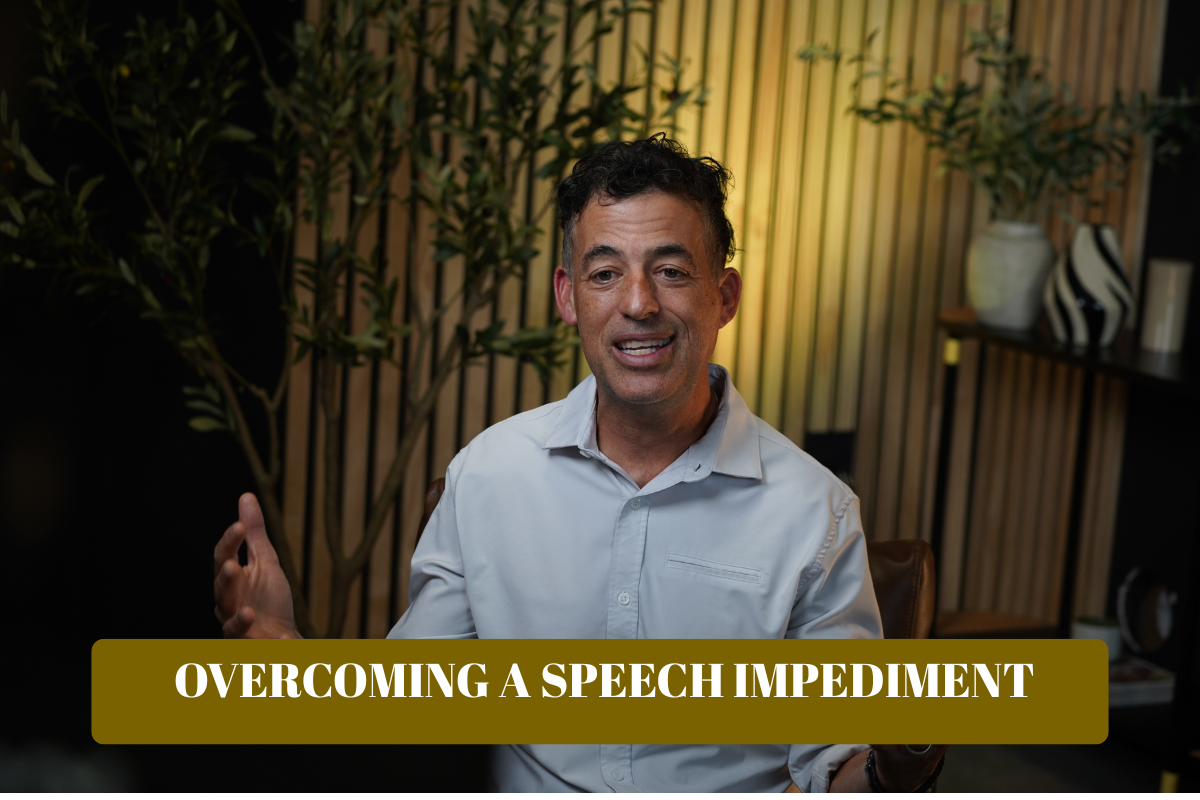
Overcoming a Speech Impediment
Overcoming a speech impediment can feel like a spotlight you never asked for. However, it doesn’t have to limit your effectiveness. Strong communicators focus on connection, not perfection – and that shift changes everything.
Reframe the Narrative
Start by adjusting how you think about your speech. Many speakers assume they need to sound flawless to be taken seriously. In reality, audiences respond to clarity, energy, and authenticity far more than technical precision.
Focus on delivering value. Emphasize your message. Commit to connection.
When you remove the pressure to be perfect, your delivery naturally improves.
Slow Down and Take Control
Rushing creates tension, and tension amplifies speech challenges. Instead, control your pace.
Use intentional pauses between ideas, key points, and when you feel pressure building.
Deliberate pacing gives you command of the moment. It also signals confidence to your audience and allows your words to land more effectively.
Strengthen Your Breath Support
Breath fuels your voice. Without control, delivery becomes strained and inconsistent.
Practice diaphragmatic breathing daily:
- Inhale through your nose
- Expand your stomach, not your chest
- Exhale slowly and steadily
This technique stabilizes your voice and reduces physical tension. In both public speaking coaching and public speaking classes, breathwork remains a foundational skill for a reason – it works.
Train the Tough Sounds
Avoidance reinforces anxiety. Instead, face difficult sounds head-on.
Break them down step by step:
- Practice the sound slowly
- Build it into simple words
- Progress into full sentences
Consistent repetition builds muscle memory. Over time, those sounds lose their power.
Rehearse Out Loud—Every Time
Mental rehearsal won’t prepare you for real-world delivery. You need to hear your voice and experience your pacing in real time.
Record your practice sessions:
- Watch once with sound to evaluate clarity
- Watch again without sound to assess body language
This approach sharpens both verbal and nonverbal communication. Many public speaking classes rely on this exact method to accelerate improvement.
Stay Present, Not Perfect
Mistakes happen. What matters is how you respond.
Reset quickly. Continue confidently. Keep your focus on the audience, not on the slip.
A simple line like, “Let me say that again,” demonstrates composure and control. Audiences respect speakers who recover smoothly.
Get Expert Support When Needed
Targeted guidance can speed up your progress. A speech-language pathologist can address specific patterns, while public speaking coaching helps you apply those improvements in high-stakes situations.
Together, those approaches create both technical growth and real-world confidence.
Turn the Challenge Into an Advantage
Working through a speech impediment builds discipline, awareness, and resilience. Those qualities elevate your presence in ways that go far beyond speech alone.
You become more intentional, communicate with greater purpose, and connect more deeply.
Ultimately, audiences don’t remember perfect delivery – they remember how you made them feel. Use your voice with clarity, confidence, and conviction, and your message will always rise above the mechanics.
About Dave
With 25+ years on camera and on stage, Miami-based Dave Aizer helps individuals and organizations elevate their communication skills through dynamic coaching and unforgettable keynotes. As seen on CBS, FOX Sports, Nickelodeon, and TEDx.
QUICK LINKS:
Contact Dave for public speaking coaching in Miami, Fort Lauderdale, West Palm Beach, and throughout the United States.