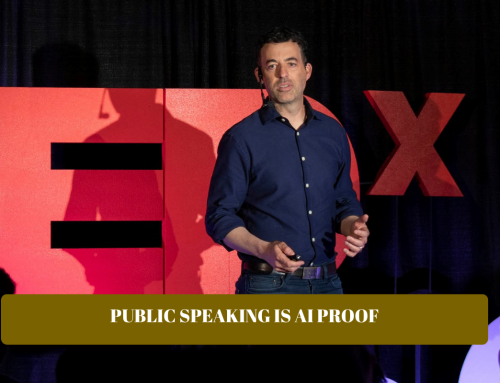
Public Speaking Mistakes Executives Make
Key Takeaways
- Great leaders often lose credibility through avoidable communication mistakes.
- Overloading audiences with information weakens influence and engagement.
- Executive presence is built through clarity, confidence, and connection.
- Small adjustments in delivery can dramatically improve presentation outcomes.
Strong leadership requires strong communication. However, many accomplished professionals unknowingly make public speaking mistakes that reduce their impact. Public speaking mistakes executives make often have little to do with expertise and everything to do with how ideas are delivered.
The reality is simple: executives who communicate clearly, confidently, and strategically are more likely to influence teams, inspire action, and build trust. Conversely, even brilliant ideas can fall flat when communication gets in the way.
The Most Common Public Speaking Mistakes Executives Make
Many executives assume public speaking is about presenting information. In reality, it’s about helping an audience understand, remember, and act on that information.
Unfortunately, several common habits often get in the way.
Mistake #1: Trying to Say Too Much
One of the biggest communication challenges I see during public speaking coaching sessions is information overload.
Executives often feel compelled to share every detail, every data point, and every possible explanation. While the intention is good, the result is usually the opposite of what’s intended.
When audiences receive too much information, they retain very little.
Instead, focus on:
- Three primary points
- Clear supporting examples
- Actionable takeaways
- Memorable stories
In other words, clarity beats complexity every time.
Mistake #2: Focusing on Content and Ignoring Delivery
Many leaders spend hours building slides and only minutes practicing delivery.
However, audiences evaluate more than the words being spoken. They notice tone, energy, confidence, eye contact, pacing, and body language.
This is where executive presence becomes critical.
A strong message delivered with hesitation can lose credibility. Meanwhile, a simple message delivered confidently often creates lasting impact.
As a result, presentation coaching should focus on both what you say and how you say it.
Mistake #3: Reading Slides Instead of Leading the Room
PowerPoint should support your presentation, not become your presentation.
Yet many executives unintentionally turn into narrators of their slides.
When this happens:
- Audience engagement drops
- Eye contact disappears
- Energy declines
- Attention shifts away from the speaker
Instead, think of slides as visual aids.
Your audience came to hear your perspective, not read text they’ve already seen on a screen.
Why Executive Presence Matters More Than Ever
For leaders in Miami, Fort Lauderdale, and throughout South Florida, communication has become a competitive advantage.
Executives are expected to communicate effectively across multiple environments:
- Boardroom presentations
- Team meetings
- Media interviews
- Investor pitches
- Industry conferences
- Virtual presentations
Therefore, executive presence is no longer a “nice-to-have” skill.
It’s a leadership requirement.
According to research from Harvard Business Review, leaders who communicate clearly and authentically are more likely to build trust and inspire action.
The ability to communicate under pressure often separates good leaders from exceptional ones.
Mistake #4: Speaking to Themselves Instead of the Audience
Many presenters prepare around what they want to say.
Elite communicators prepare around what their audience needs to hear.
Before any presentation, ask:
- Who is my audience?
- What do they care about?
- What challenges are they facing?
- What action do I want them to take?
These questions shift the focus away from the speaker and toward the listener.
Consequently, presentations become more relevant, engaging, and persuasive.
Mistake #5: Not Practicing Under Realistic Conditions
Reading notes silently is not practice.
Neither is reviewing slides on a laptop.
Effective preparation requires speaking out loud.
Ideally, executives should:
- Rehearse standing up
- Practice with timing
- Record themselves
- Simulate audience questions
- Receive objective feedback
This is one reason why communication training and executive coaching can accelerate improvement so quickly.
The gap between how we think we sound and how we actually sound is often larger than expected.
Small Adjustments Create Big Results
The good news is that most public speaking mistakes executives make are highly fixable.
Often, the improvements are surprisingly simple:
- Pause more often
- Slow down your pace
- Eliminate filler words
- Improve vocal variety
- Strengthen eye contact
- Simplify key messages
Although these changes may seem small, they can dramatically increase audience engagement and confidence.
Ultimately, great communication is not about perfection.
It’s about connection.
Final Thoughts
The strongest executives aren’t necessarily the smartest people in the room. They’re often the people who communicate ideas most effectively.
Whether you’re presenting to investors, leading a team meeting, delivering a keynote, or handling a media interview, communication skills directly influence leadership effectiveness.
Fortunately, public speaking is a skill that can be developed.
With the right preparation, feedback, and practice, executives can transform nervous presentations into confident, high-impact communication moments.
Ready to Elevate Your Communication?
If you’re preparing for a high-stakes presentation, keynote, media interview, or leadership opportunity, consider investing in professional coaching.
Learn more about:
A brief strategy call can help identify opportunities to strengthen your communication and executive presence.
FAQ
What is the biggest public speaking mistake executives make?
Trying to communicate too much information at once. Audiences remember clear, focused messages more effectively than lengthy presentations packed with details.
Can executive presence be learned?
Yes. Executive presence is a skill that can be developed through communication training, feedback, practice, and experience.
How can I become a more confident public speaker?
Preparation, repetition, and constructive coaching are among the fastest ways to improve confidence and presentation effectiveness.
Why is public speaking important for executives?
Leaders are constantly communicating with employees, clients, investors, and stakeholders. Strong communication helps build trust, influence decisions, and inspire action.
Should executives work with a public speaking coach?
Many executives benefit from working with a coach because it provides objective feedback, personalized strategies, and realistic practice opportunities.
About Dave
With 25+ years on camera and on stage, Miami-based Dave Aizer helps individuals and organizations elevate their communication skills through dynamic coaching and unforgettable keynotes. As seen on CBS, FOX Sports, Nickelodeon, and TEDx.