Using Your Hands When Presenting: Why It Matters and How to Do It Well
Key Takeaways
- Using your hands when presenting is not a stylistic choice – it is a communication tool that builds trust, reinforces your message, and creates connection with your audience.
- Keeping your hands still or hidden signals tension to your audience, even when your words say otherwise.
- Natural, intentional gestures make you more credible, more memorable, and easier to follow.
- Like any presentation skill, purposeful hand movement can be practiced and built – it does not have to feel natural from day one.
Using your hands when presenting is one of the most underestimated tools a speaker has – and one of the first things an audience notices when it’s missing. You can have a strong message, solid delivery, and real expertise, and still leave the room feeling flat if your body isn’t communicating alongside your words. Hands are not a distraction from your content. Used well, they are part of it.
Here is the core idea: your audience reads your entire body, not just your words. When your hands are locked at your sides, clasped in front of you, or tucked behind your back, that stillness registers as tension – even when you feel composed. Freeing your hands frees your presence.
Why Hands Matter More Than Most Presenters Realize
Most executives focus their presentation prep on content – what to say, how to structure it, which slides to include. Physical delivery, including hand movement, gets treated as a secondary concern at best and an afterthought at worst. That’s a costly gap.
Research covered by the Harvard Business Review shows that audiences form judgments about a speaker’s warmth and competence within seconds – and that physical cues, including gesture and body language, drive a significant portion of those impressions. In other words, how you move while you speak shapes how credible and trustworthy you appear, often before a single idea has landed.
Using your hands when presenting amplifies the words coming out of your mouth. Gestures reinforce meaning, help the audience track your thinking, and signal that you are engaged with what you are saying. A speaker who gestures naturally reads as more confident, more passionate, and more worth listening to.
What Happens When You Don’t Use Your Hands
Still hands are rarely neutral. When a presenter keeps their hands motionless – gripping the podium, locked at their sides, or folded in front of them – the audience picks up on the physical tension even if they can’t name it. The overall impression tends to be stiffness, discomfort, or a lack of conviction.
For executives presenting in high-stakes settings – investor meetings, keynotes, board rooms – that impression has real consequences. A leader who looks physically constrained can undermine the authority of their own message. The content might be excellent. The data might be airtight. But if the body is sending signals of tension, the audience unconsciously discounts what the words are saying.
This is especially common among executives who are naturally more reserved or who have been told at some point to “calm down” or “be more professional” when speaking. Over time, the instinct becomes to minimize physical expression entirely – which solves one problem and creates another.
Using Your Hands When Presenting – The Right Way
There is a meaningful difference between purposeful gesture and nervous fidgeting. The goal is not to move your hands constantly – it is to use them intentionally, in ways that reinforce what you are saying rather than distract from it. A few principles make that distinction clear.
1. Start From a Neutral, Open Position
The home base for your hands should be relaxed and visible – not gripping something, not hidden, not crossed. Hands resting comfortably in front of you at waist level, slightly apart, gives you a natural launching point for gestures, and signals openness to the audience. From that position, movement feels easy rather than forced.
2. Let the Content Drive the Gesture
The most natural gestures are the ones that match what you are saying. Enumerating points? Count them on your fingers. Describing something growing? Let your hands rise. Contrasting two ideas? Separate them physically into left and right. Using your hands when presenting this way feels instinctive rather than choreographed – because it is following the logic of your own words.
3. Use the Space in Front of You
Gesture that stays close to the body reads as small and tentative. Opening your arms into the space in front of you – even just slightly wider than your shoulders – projects confidence and draws the audience in. The bigger the room, the more generous the gesture needs to be to read clearly from the back row.
4. Slow Down the Movement
Fast, jerky hand movements read as nervous energy. Deliberate, slower gestures read as authority. When you slow your hands down slightly – even 20 percent – the quality of your presence shifts noticeably. Audiences read slow, intentional movement as control, which is exactly what you want them to feel from a leader.
Adding Gestures as a Layer of Connection
For executives who are already strong on content and structure, adding purposeful hand movement is the next layer – the thing that takes a technically solid presentation and makes it feel alive. It is the difference between a speaker the audience respects and a speaker the audience connects with.
Connection matters, especially in keynotes and team presentations, where the goal isn’t just to inform but to move people. Using your hands when presenting in these settings gives the audience something to track physically, which keeps attention higher and makes the overall experience more dynamic. A still speaker is easier to tune out. A speaker whose body is engaged is harder to ignore.
Think of gestures as punctuation for your words. It marks what matters. It signals transitions and draws emphasis to the moments you most want the audience to remember.
Why This Is Especially Important for Women Leaders on Stage
Women executives often receive conflicting feedback about physicality in presentations – told simultaneously to be more assertive and more contained. The result is frequently a physical presentation style that is cautious by design, where hands are kept still to avoid any perception of being “too much.”
In practice, that caution works against them. Audiences – regardless of the speaker’s gender – respond to physical expressiveness as a signal of confidence and conviction. Using your hands when presenting gives women leaders on stage a tool to claim the room more fully, project authority more naturally, and connect with audiences more deeply, all without changing a word of the content.
The goal is not performance. It is presence – and presence is built from the inside out, through practice, feedback, and the permission to take up a little more space.
Executive Presence in Miami and South Florida
South Florida’s business culture puts executives in front of rooms regularly – panel discussions, investor pitches, networking events, and keynote stages. Physical presence matters in every one of those settings. Leaders who show up with command of their body – not just their content – consistently make stronger impressions and leave more lasting impact.
The good news is that using your hands when presenting is a trainable skill. You do not have to be naturally expressive to develop it. With the right coaching and deliberate practice, it becomes second nature – another tool in the executive communication toolkit rather than something to consciously manage.
How Coaching Develops Physical Presence and Gesture
Most executives can’t see their own presentation habits clearly – which is exactly why self-correction is so difficult. Working with a coach gives you an outside set of eyes on what your body is actually communicating, and a structured way to build new habits that feel natural rather than performed.
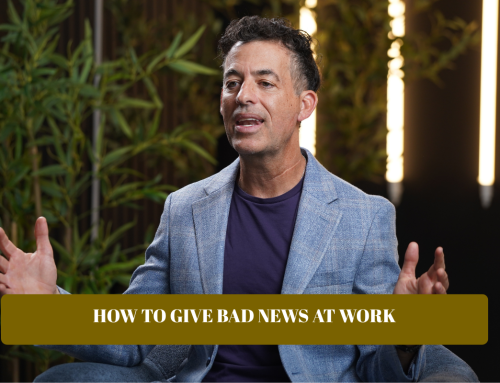
Private coaching gives executives a space to work on the full picture – message, delivery, and physical presence – so that every layer of the presentation is working together. If using your hands when presenting is a skill you want to build, explore private coaching with Dave.
For leadership teams where physical presence and executive communication are development priorities across the board, team communication training builds those skills simultaneously across your key presenters.
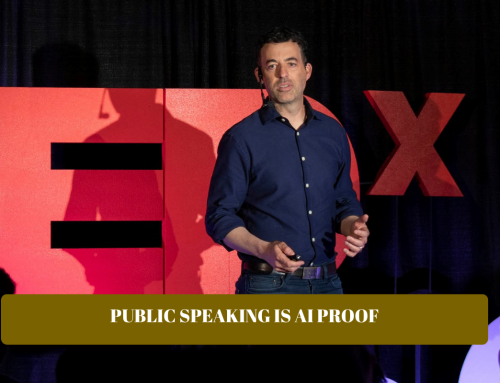
And for executives building a keynote speaking platform, gestures and physical storytelling are core to what separates a good talk from one the audience remembers long after they’ve left the room.
Your Body Has More to Say Than You Think
The words in your presentation are only part of what your audience receives. Your posture, your eye contact, and your hands are all communicating alongside your content – whether you intend them to or not. When those layers are aligned, the impact of everything you say multiplies.
If you’re ready to show up in every room as a more complete, more connected, and more commanding communicator, let’s get to work. Explore coaching at DaveAizer.com and start using every tool available to you.
Frequently Asked Questions
Why is using your hands when presenting important?
Hand gestures reinforce your message, help the audience track your thinking, and signal confidence and conviction. Audiences read physical expressiveness as a sign of credibility – and still hands often register as tension or discomfort, even when the speaker feels composed.
What are natural hand gestures for presentations?
Natural gestures follow the logic of the content – counting points on your fingers, using your hands to show scale or contrast, opening your arms to emphasize an idea. Starting from a relaxed, open home-base position and letting the words drive the movement produces gesture that feels genuine rather than rehearsed.
Can you learn to use your hands more when presenting?
Yes. Using your hands when presenting is a trainable skill. With deliberate practice and coaching feedback, executives who naturally present with still hands can develop purposeful, confident gesture that feels authentic and becomes second nature over time.
What should you avoid doing with your hands during a presentation?
Avoid gripping the podium, clasping your hands tightly, tucking them behind your back, or putting them in your pockets. Fast, repetitive, or self-touching gestures – like adjusting clothing or touching your face – read as nervous energy. The goal is open, deliberate movement that reinforces rather than distracts.
Is there presentation coaching for body language and gestures in Miami or South Florida?
Yes. Dave Aizer is a Miami-based executive communication coach who works with CEOs, founders, and executives across South Florida and nationally on physical presence, gesture, and delivery – alongside message and structure. Coaching is available in-person and virtually.
About Dave
With 25+ years on camera and on stage, Miami-based Dave Aizer helps individuals and organizations elevate their communication skills through dynamic coaching and unforgettable keynotes. As seen on CBS, FOX Sports, Nickelodeon, and TEDx.